A pump fails at a well site outside Midland. A contractor in Frisco comes up one pallet short, and the crew is standing around on the clock. Neither shipper can wait days for space on a full truckload. That gap is exactly what hot shot trucking fills.
If you've been asking "what is hot shot trucking, and is it right for my freight?", this guide gives you a straight answer. It covers what the term means, how a load moves from your call to the receiver's dock, how it compares with other freight options, and what to have ready when you book. It's written for Texas shippers, from Dallas–Fort Worth to the Permian Basin and the Gulf Coast.
What Is Hot Shot Trucking? The Plain-English Meaning
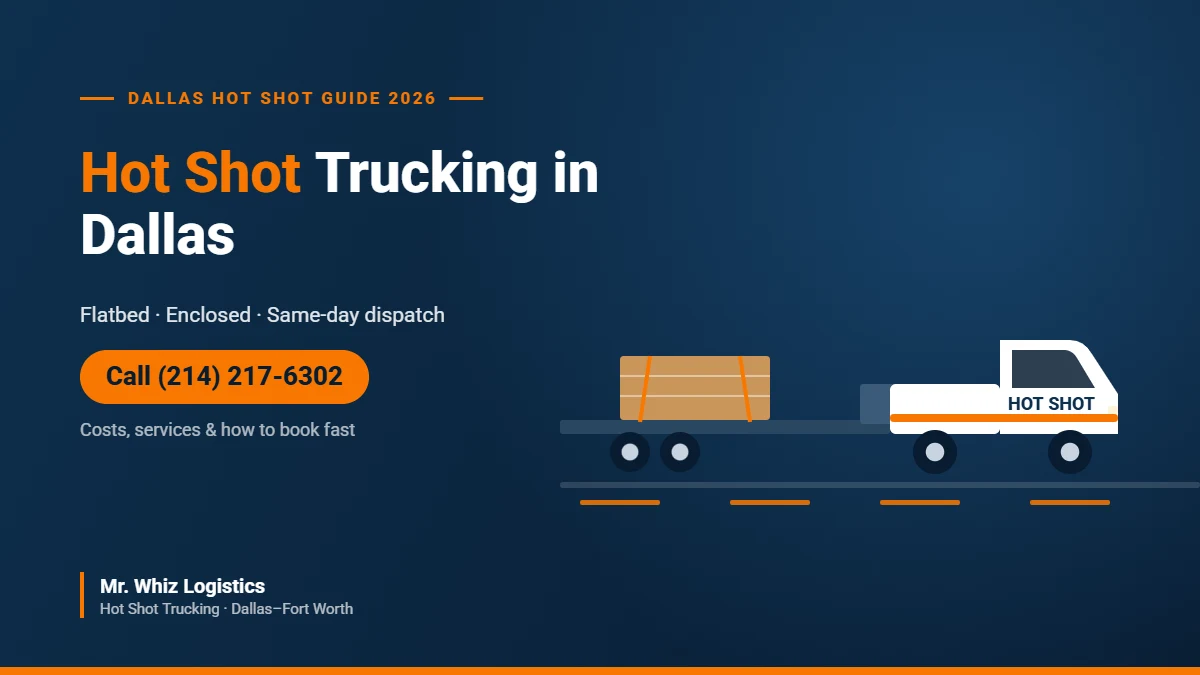
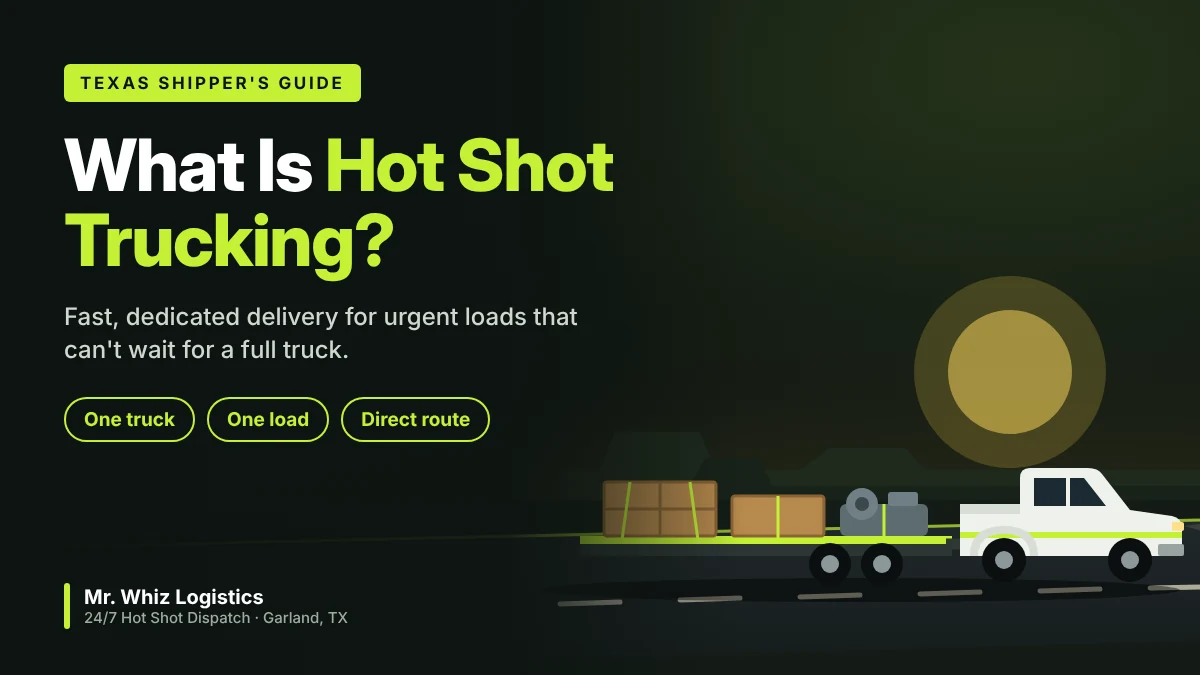
Hot shot trucking is the fast, dedicated delivery of smaller loads that can't wait. Instead of a Class 8 semi and a 53-foot trailer, a hot shot carrier uses a medium-duty truck, often a one-ton dually pickup, pulling a flatbed or enclosed trailer. The driver picks up your freight and takes it straight to the delivery point. There are no terminal stops and no waiting for other shippers' freight to fill the trailer.
The hot shot trucking meaning has Texas roots. The term is widely traced to the oilfields of the 1970s, when pickups and trailers rushed critical parts to drilling rigs that couldn't afford to sit idle. The practice spread to construction, agriculture, and manufacturing, but the idea stayed the same: a "hot" load is urgent, and a hot shot gets it there fast.
Typical hot shot loads include:
Machinery and replacement equipment parts
Construction materials and tools
Oilfield equipment such as valves, pumps, and fittings
Agricultural equipment
One to a few pallets of time-sensitive goods
How Does Hot Shot Trucking Work?
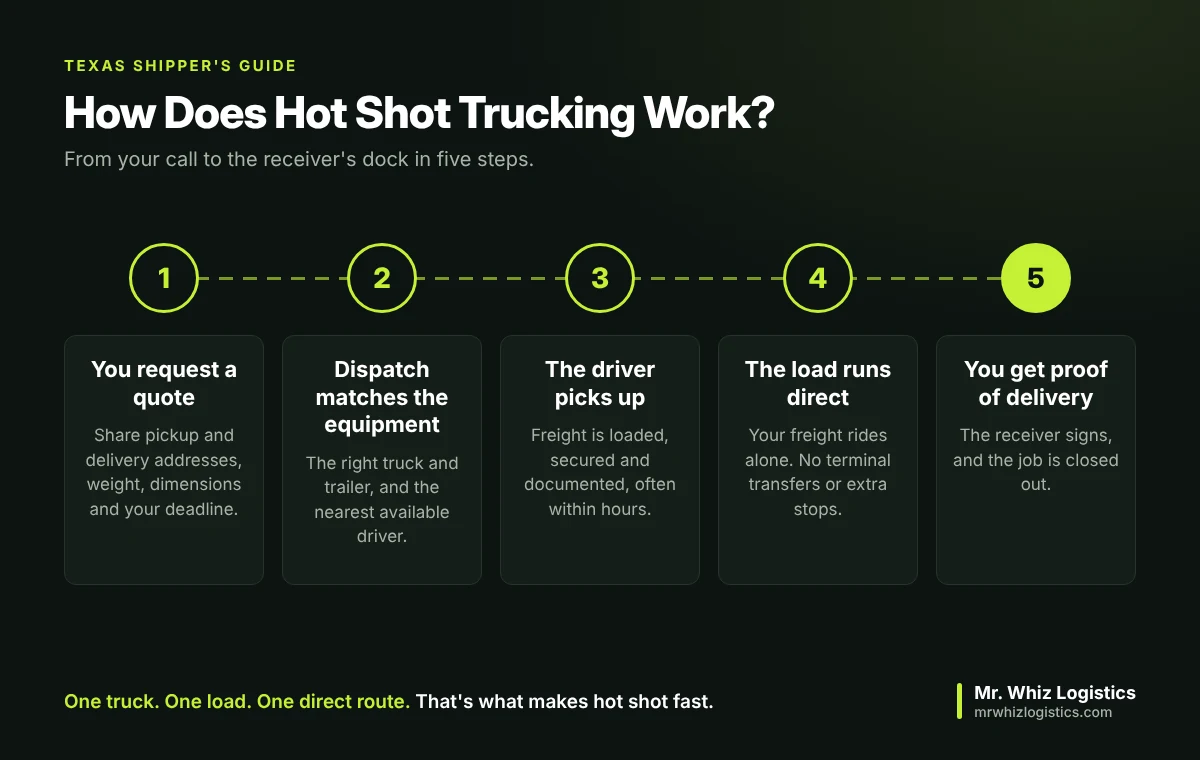
Hot shot trucking assigns one truck and one driver to your load and sends them directly. A typical run looks like this:
You request a quote. Share pickup and delivery addresses, freight weight, dimensions, and your deadline.
Dispatch matches the equipment. The carrier picks the right truck and trailer and the nearest available driver.
The driver picks up. The driver loads, secures, and documents the freight, often within hours of booking.
The load runs direct. Your freight rides alone, with no terminal transfers or extra stops.
You get proof of delivery. The receiver signs, and the job is closed out.
The equipment
Most hot shot rigs use Class 3 to Class 5 trucks, from one-ton dually pickups up to light commercial trucks. Common trailer types include:
Gooseneck flatbeds, often around 40 feet, for machinery, pipe, and palletized freight
Dovetail and tilt-deck trailers for wheeled or tracked equipment
Bumper-pull flatbeds for lighter, shorter loads
Enclosed trailers and cargo vans for freight that needs protection from weather
At Mr. Whiz Logistics, the hot shot fleet includes 20- and 40-foot flatbeds, 16- and 24-foot enclosed trailers, and sprinter vans with lifts. Capacity depends on the setup, so share exact weight and dimensions when you ask for a quote.
The rules that still apply
Hot shot rigs are smaller than semis, but they are still regulated. Under FMCSA licensing standards, a driver needs a Class A CDL when the truck and trailer have a combined weight rating of 26,001 pounds or more, and the trailer is rated over 10,000 pounds. Many one-ton dually and gooseneck combinations cross that line.
Texas adds its own layer. A carrier hauling only within Texas needs a TxDMV number when its vehicle or combination is rated over 26,000 pounds. It must hold a USDOT number first and keep at least $500,000 in liability insurance on file with the state. Carriers crossing state lines need a USDOT number and federal operating authority.
For shippers, the takeaway is simple: ask for the carrier's USDOT number and proof of insurance before you tender freight.
What Texas Shippers Move by Hot Shot
Texas freight runs on deadlines, which is why hot shot trucking started here and stays busy here. Most loads fall into five groups:
Oil and gas. Pumps, valves, pressure-control equipment, and fittings headed to well sites in the Permian Basin, the Eagle Ford, and East Texas. A rig waiting on a part loses money every hour.
Construction. Steel, lumber, tools and small equipment for job sites across Dallas–Fort Worth, Austin and Houston. One short delivery can stall a whole crew.
Agriculture. Implements, irrigation parts and ranch equipment for operations far from any freight terminal.
Manufacturing and industrial. Replacement parts that keep a line running, from DFW plants to Gulf Coast facilities.
Retail and distribution. Store transfers and rush inventory when a shelf can't wait for the next scheduled truck.
Distance matters too. Dallas to Midland is roughly 330 miles, so a direct hot shot can often pick up in the morning and deliver the same day.
When Hot Shot Is the Right Call, and When It Isn't
Hot shot is worth the premium when speed or access matters more than cost per pound.
Choose hot shot when:
Downtime costs more than the freight bill: an idle rig, a stalled crew or a stopped line
The load is too big for a courier but far too small for a 53-foot trailer
The site is remote, tight or rough, where a smaller rig gets in and a semi can't
You want one point of contact and live updates from pickup to delivery
Your freight shouldn't be handled at terminals, where every transfer adds damage risk
Look at other options when:
The shipment fills most of a trailer, since a full truckload costs less per pound
The deadline is flexible, and LTL can do it for less
The load is too heavy or oversized for a hot shot rig and needs heavy-haul equipment and permits
How to Book a Hot Shot Load
A fast, accurate quote starts with complete load details. Have these ready before you call:
Pickup and delivery addresses, plus dock, forklift, or crane availability at each end
What the freight is, its weight, and its length, width, and height
Number of pieces or pallets and how they're packaged
Pickup window and hard delivery deadline
Special needs such as tarps, chains, or a liftgate
How pricing works. Most hot shot quotes reflect loaded miles, any empty miles the driver runs to reach you, freight size and weight, and urgency. Extras like tarping, wait time, or after-hours delivery can add to the price. Ask for an all-in quote so the invoice matches what you agreed to.
How to vet a carrier. Look up the carrier's USDOT number in FMCSA's free SAFER Company Snapshot to confirm it's active and review its safety record. Ask for a certificate of insurance showing both liability and cargo coverage. Then confirm who your dispatcher is and how you'll get updates in transit.
Hot Shot Trucking FAQ
Is hot shot trucking the same as expedited shipping?
Hot shot is one type of expedited freight. What sets it apart is the equipment: medium-duty trucks pulling flatbed or enclosed trailers, rather than semis or small parcel vans.
How fast is hot shot delivery?
It depends on distance, load size, and driver availability. Trucks often dispatch within hours, and many in-state Texas runs can be picked up and delivered the same day.
Is hot shot more expensive than LTL?
Usually, per shipment, because you're paying for a dedicated truck. But it often costs far less than the downtime it prevents, and less than booking a full semi for a small load.
Can hot shot carriers haul enclosed freight?
Yes. Enclosed trailers and cargo vans handle freight that needs protection from rain, dust or theft.
Do hot shot drivers need a CDL?
It depends on the rig. A Class A CDL is required when the truck and trailer are rated at 26,001 pounds or more combined, and the trailer is rated over 10,000 pounds.
Need a Hot Shot in Texas? Talk to Mr. Whiz Logistics
When your next load can't wait, Mr. Whiz Logistics can move it. We dispatch 24/7 from Garland, serving Dallas–Fort Worth and beyond, with flatbeds, enclosed trailers, and sprinter vans ready to roll. Every hot shot comes with a dedicated dispatcher, live GPS tracking, cargo coverage, and an upfront, all-inclusive quote.
Call (214) 217-6302 or request a free quote and tell us what you're moving. We'll match the right equipment and get your freight on the road.